Official
County court
Pitt County Superior Court
Criminal court, divorces and other civil filings.
Open official site Pitt County Superior CourtNorth Carolina, county records
Find the right office in Pitt County. Court cases, deeds and parcels, sheriff and jail records, vital records and county filings, each linked to the office that keeps them.
Start here
Every card below goes to the government office responsible for that record. Use the category buttons to narrow the list.
County court
Criminal court, divorces and other civil filings.
Open official site Pitt County Superior CourtProperty records
The Pitt County Register of Deeds records the deeds, mortgages, plats, marriage licences and birth and death certificates for the county and keeps the index to them.
Open official site Pitt County Register of DeedsPolice & jail
The Pitt County Sheriff's Office is the county's law enforcement agency and holds its arrest records, incident and accident reports and the roster of people held in the county jail.
Open official site Pitt County Sheriff's OfficeCity records
Links to the cities in Pitt County.
Open official site Pitt County MunicipalitiesState records
Index of Pitt's services and resources.
Open official site Pitt County DirectoryFederal
Find facts and figures about the county.
Open official site Pitt County CensusCourt records
Pitt County District Court, with the court location, contacts and the case records this office keeps.
Open official site Pitt County District CourtProperty records
Review and obtain property taxes and more.
Open official site Pitt County Tax InformationCity records
Information for students, parents and teachers.
Open official site Pitt County SchoolsState records
The Pitt County government site gives the county's departments, the minutes of its governing board and the office to ask for each kind of county record.
Open official site Pitt County General InformationCounty court
Find information on domestic and juvenile cases.
Open official site Pitt County Family CourtProperty records
The Pitt County property search gives the owner, the parcel number, the legal description and the assessed value of each parcel in the county.
Open official site Pitt County Online Parcel Information SystemEverything else, organized
23 more Pitt County sources not listed above.
Local record guide
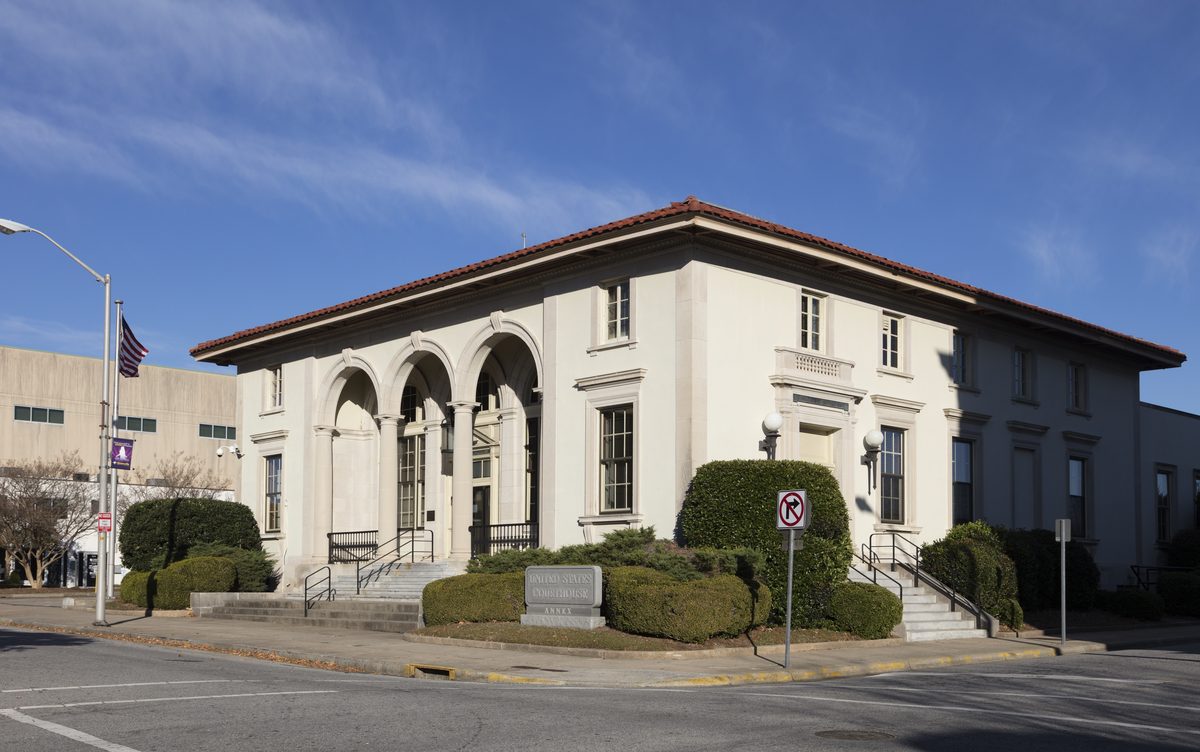
County profile
Sheriff & Law Enforcement. Pitt County Sheriff's Office is responsible for law enforcement in the unincorporated areas of Pitt County.
Police Departments. Pitt County is served by several law enforcement agencies, including Pitt County Sheriff's Office and municipal police departments such as the Greenville Police Department, Ayden Police Department, and Winterville Police Department. Each department has jurisdiction over its respective city or town, handling local law enforcement duties and collaborating with the Sheriff's Office on major investigations.
Law Enforcement & Arrests. Pitt County Sheriff's Office, located at 3819 South Memorial Drive, Greenville, NC 27834, is the primary law enforcement agency for unincorporated areas of Pitt County. Inmates housed at Pitt County Detention Center can be located through the Sheriff's Office website inmate search portal, which provides booking information, charges, bond amounts, and projected release dates. Arrest records in Pitt County are public records under North Carolina General Statute § 132-1, the North Carolina Public Records Law, which mandates that public records be made available for inspection and copying by any person unless specifically exempted.
Criminal Records. For an authoritative source, see Court Records | North Carolina Judicial Branch .
Arrest Records. They are maintained by the arresting agency, primarily the County Sheriff's Office and municipal police departments.
The Detention Center is located at 124 New Hope Road, Greenville, NC. You can visit their website or contact them directly at (252) 902-2850 for more information on accessing the inmate search feature.
Abandoned mine records
Where the workings are, and the office that holds the mine maps.
From the old mine records
The mine records hold 18 mine sites inside the county: 7 past producers, now closed, 11 sites producing when the record was made; the old survey maps add 13 holes drawn inside the county, 0 of them shafts or tunnels. The minerals the records name are construction sand and gravel; Granite; Stone, Crushed/Broken.
A point in either file is a location, not a property line: the sheet shows the opening on the surface, not the rooms under it. The record that shows what runs under a parcel is the mine map. The OSMRE National Mine Map Repository holds scanned underground mine maps and answers requests for a named mine or an area. No abandoned mine inventory is published online.
Caves and sinkhole ground. The USGS karst map puts most of Pitt County on limestone at or near the surface; all 7 of its neighbors lie on karst ground too, among them Martin, Greene and Lenoir counties. Such rock dissolves into caves and sinkholes. The North Carolina list covers every county.
North Carolina abandoned mine maps ranks every county and town in the state by the workings recorded inside it, names the office that holds the mine maps, and says what to do if the ground moves.
Disclaimer: The mine information here is for general information only. Old mine records can be incomplete, outdated or wrong, and finding nothing here does not mean there is nothing there. Check with the mine map office named here before you rely on it, and have a qualified engineer look at any ground you are worried about. PublicRecordCenter.com assumes no responsibility or liability for any errors, omissions, or consequences arising from the use of this information.
Know before you ask
Each figure below was read on the official source linked beside it, October to November 2026. A fee or rule the source does not state is left out rather than guessed, and offices can change their schedules, so confirm on the source before you pay or travel.
Pitt's real-estate records guidance describes online documents from September 1762 onward, with searches by party, instrument type, book/page and date range. The office also retains older alphabetical index books for onsite research. Treat the advertised online span as a starting point for identifying a series, not a promise that every old name has modern searchable indexing. If a spelling produces no result, work through the relevant grantor or grantee index, record the book/page reference and retrieve the instrument by that reference. The index points to the evidence; the recorded pages show the transaction and its description.
The Register of Deeds schedule lists certified birth, death and marriage copies at $10 each. A certified recorded-document copy uses a different formula: $5 for its first page and $2 per additional page. Ordinary public photocopies are generally listed at $0.25 per page, subject to posted rates. Identify whether the request concerns a vital certificate, a recorded deed or an ordinary photocopy before authorizing payment. A new marriage license is also a different transaction from a certified copy of a license already issued. Use the office-specific contact at 100 E. 1st Street rather than the countywide footer address.
The county's identity-protection instructions explain how to request removal of specified sensitive identifiers from public-facing records. Record the instrument or book/page reference and pinpoint the location of the number before contacting the Register. Redaction of a protected number is different from deleting the underlying deed or changing its legal effect. Keep enough identifying information for staff to locate the actual image; a general statement that personal information exists somewhere under a common surname is less useful. Ask how the office will confirm the redaction and whether the request concerns the online image, another public copy, or both.
The 911 records request procedure asks for a separate request for each address or incident and states that staff need at least seven business days to review and process requests. Describe the incident date, approximate time, location and the requested product: audio, Computer-Aided Dispatch entries or both. Those are different records and may require different review. The posted processing period should not be turned into a promise that every requested recording will be released in full. The office describes redaction and retention limits; retain the submission details so staff can ask for clarification without starting the location search again.
North Carolina General Statutes section 132-6 calls for copies as promptly as possible and says a requester need not disclose the purpose or motive. Keep that legal standard separate from the dispatch office's posted processing guidance. Describe the existing record sought and ask for its availability rather than treating an administrative estimate as the statutory deadline.
The Pitt courthouse directory lists the building at 100 W Third Street in Greenville and distinguishes its 8 a.m. opening from the Clerk's 8:30 a.m. public opening, with weekday closing at 5 p.m. Mail uses P.O. Box 6067, Greenville, NC 27835. Specify the court file and document sought before traveling, particularly where the request involves a certified order, an older file or restricted material. The directory also identifies Farmville as an additional courthouse location. Confirm the location responsible for the service rather than assuming every listed courthouse offers the same records counter.
The state eCourts implementation notice confirms completion in all 100 North Carolina counties on October 13, 2025. Start with the official court service for the public case lookup, then ask the Clerk about the particular document needed. Statewide system implementation does not establish that every historical attachment has been digitized or that every case document is publicly accessible.
The Tax Administration office is responsible for listing, appraising and assessing property and for tax collection functions. Its assessment office is at 110 Evans Street. Use the parcel identifier and assessment description to connect the tax record with deed and plat references. A value change, an owner-name display and a recorded conveyance can reflect different stages of processing. Save the tax-year context and the record reference when comparing them. Where an address points to several parcels, investigate the relevant parcel history before treating one owner display as the complete history of the land.
Where to go
Each office below was read on its own site. A field the office does not publish is left out rather than filled in from a directory.
Recorded land documents and vital certificates.
Office page: pittcountync.gov
Court files and certified judicial records.
Office page: nccourts.gov
Property listing, appraisal and assessment.
Office page: pittcountync.gov
Labor Department file
The U.S. Department of Labor's Wage and Hour Division closed 198 investigations in Pitt County since fiscal 2005 and recorded $1,936,766 in back wages agreed for 1,619 workers. The county is the one the Census Bureau puts each employer's ZIP code in. Snapshot of April 22, 2026; a case here is a finding by the Division, not a court judgment.
The 25 employers with the most back wages agreed, of 170 on the Pitt County record; 48 employers have a page of their own and open from the table, the rest show their whole record here. The 145 more with smaller records are on the North Carolina wage theft records page, whose search answers for every employer in the state.
Straight answers
Open only the answer you need.
Booking photos are kept by the agency that made the arrest, such as the Pitt County Sheriff or a city police department in Pitt County. Ask that agency for its record.
The North Carolina criminal history record comes from the North Carolina State Bureau of Investigation (SBI). Fingerprint based Right to Review of your own record using the SBI form Request for Access to Criminal History Record Information; a certified name search of court records in one county costs $25 at the clerk of superior court with Form AOC CR 314. Fee: $14 for a NC state fingerprint based check; $18 for a national fingerprint based check.
Search the North Carolina Sex Offender Registry (State Bureau of Investigation), or every state at once on the National Sex Offender Public Website run by the U.S. Department of Justice.
Register with the county board of elections or through the North Carolina State Board of Elections. You can also register online with the state online registration. The regular registration deadline is 25 days before Election Day; same day registration is available at early voting sites during the early voting period, not on Election Day for most voters. Online registration is open only to existing DMV customers with a DMV issued driver's license or ID.
Deeds and other recorded land documents in Pitt County are kept by the Pitt County Register of Deeds. Property values are set by the county tax assessor, and tax bills come from the county tax collector. Source: official state page.
Certified birth and death certificates for North Carolina come from the NC Department of Health and Human Services, NC Vital Records. Birth, death and marriage certificates may also be obtained at the Register of Deeds office in the county where the event took place, in most cases the same day. Online, by phone or by mail through VitalChek, the only authorized vendor for a state issued certified birth certificate, or in person at NC Vital Records. Fee: $24 state search fee, which includes one certificate; $15 for each added certificate.
Business entity filings are searched with the North Carolina Secretary of State, Business Registration Division. North Carolina has no single generic business license; besides state licenses, a local license may be required for your business.
Its real-estate guidance describes documents from September 1762 and onsite legacy index books. Search names and book/page references using the county research instructions.
The Register lists $5 for the first page and $2 for each additional page of a certified recorded document. This differs from its vital-certificate products. See the fee schedule.
The county describes removal of specified sensitive information from public-facing records. That process is separate from changing the underlying instrument. Follow the redaction instructions.
The published procedure requires a separate request for each address or incident. Identify the audio or CAD product in the 911 request route.
The directory distinguishes the building's 8 a.m. opening from the Clerk's 8:30 a.m. public opening on weekdays. Check the courthouse hours.
The judicial directory supplies P.O. Box 6067, Greenville, NC 27835 as its mailing address, separately from the visitor location. Use the court contact details and confirm the division.
The assessment office is listed at 110 Evans Street; the Register lists 100 E. 1st Street. Choose the tax office or Register for the record required.
No. It is the published review and processing allowance, while release and redaction remain record-specific. See the 911 record instructions.
Same county
Use the city page when a record was created by a municipal police department or city office; use the county page for courts, deeds, vital records and jail custody.
Statewide